Branding
How to Choose a Business Name: 6 Tests Before You Commit
5 min read
You have had the name in your head for months. You told your family, liked their reaction, even sketched a logo in a notebook. The night before opening the business, you finally search for it and find that the web address already belongs to someone else, or that nobody can spell the name correctly after hearing it once.
It is the most common scare for anyone deciding how to choose a business name. And it usually arrives late, when the business cards are already printed and the sign has already been quoted.
Short answer: pick the name that passes six tests before you fall in love with it: you can say and spell it without explaining, the web address is free, nobody else in your field uses it, it can handle the business growing, it sounds right next to a description of what you do, and it has a realistic shot at trademark registration. Liking the name comes last, not first.
What is the most common mistake when naming a business?
Choosing by taste and researching afterwards. The name turns into affection before it turns into a decision, and every problem that shows up looks like a detail to work around. The reverse order is cheaper: gather five or six options, run all of them through the tests below, and only then choose among the survivors.
A name is the hardest part of a brand to change. Color, typeface and symbol can be renewed over time. The name is on the contract, the domain, the invoice and in your customers’ mouths. That is why it deserves more method than any other choice in the identity.
The 6 tests before you commit to a name
- The pronunciation test. Say the name over the phone to someone who has never seen it. If they ask you to spell it, or write it differently, the name will cause friction every time someone recommends your business.
- The meaning test. Check what the name means in other languages and whether it resembles a strange word or a well-known brand. This matters most if you plan to serve clients outside Brazil.
- The address test. Check whether the domain is free, and the social media handle too. A great name whose address belongs to another company becomes a name with an asterisk. Who owns that address matters as well, and we cover it in who should own your website domain.
- The market test. Search the name on Google and social media together with your line of work. If a similar company already exists in the same sector, customers will mix them up, and so will search engines.
- The trademark test. Check the trademark database before you decide. If someone else has already registered the name for an activity close to yours, you may have to change it after investing in the brand. For an important name, it is worth talking to an intellectual property professional.
- The future test. Ask whether the name still works if the business grows, opens a second line or changes audience. A name that describes today’s product too closely traps the business in yesterday’s product.
None of these tests takes creative talent. They take the patience to run the checks before falling in love.
A personal name, a descriptive name or an invented one?
All three paths work, each at its own price:
| Type | Logic | Upside | Watch out for |
|---|---|---|---|
| Personal name | The professional’s first and last name | Builds trust in services based on a direct relationship | Hard to sell or to grow beyond the person |
| Descriptive name | Says what the company does | Understood at once | Hard to register and to stand out |
| Invented or suggestive name | A new word or an associated image | Easier to register and to remember | Needs investment to gain meaning |
There is no option that is right for everyone. There is the one that fits your business, your ambition and your promotion budget.
When the name is the person’s own
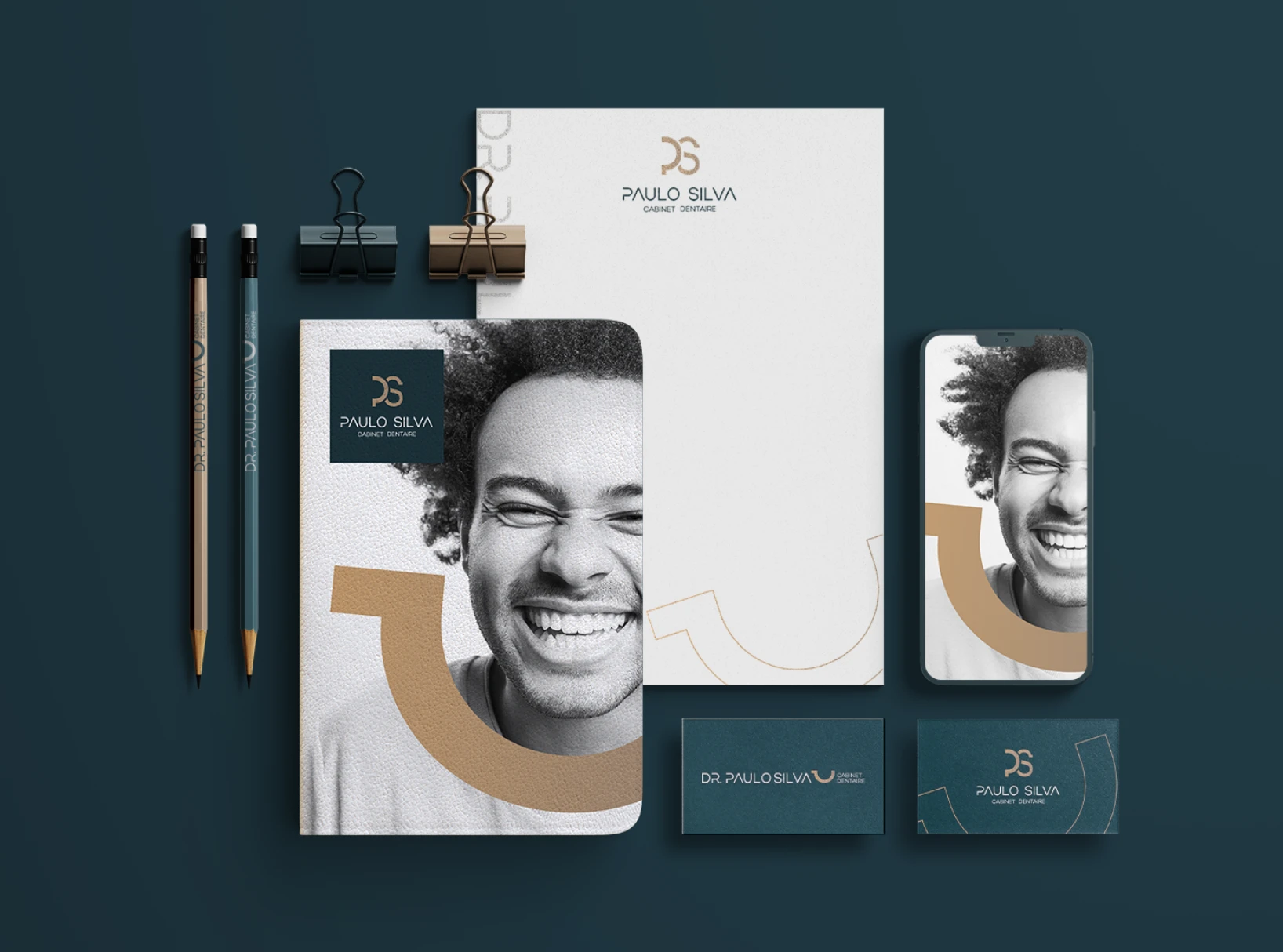
In trust-based services such as health, law and consulting, the person’s own name is often the most natural choice. What changes is the need to pair that name with a description of what they do. In the brand identity for Dr. Paulo Silva, on the cover of this post, the name always comes with its descriptor line (Cabinet Dentaire), on the letterhead, the notebook, the business card and the phone screen. The name alone says who the person is. The descriptor says what they do. Together they work better than either one alone.
How we do naming at the studio
When a client does not have a name yet, naming becomes a project inside the brand project. Our process has four stages, the same ones described on our branding and visual identity page:
- Name territories: before listing names, we define the territory they will move in: the idea, the tone and what the name needs to evoke.
- Generating and filtering: we create many options and cut the ones that fail the tests above.
- Pronunciation and meaning tests: we check how the name sounds and what it might mean.
- Domain and trademark checks: done before any decision, never after.
That is why a project with naming usually takes longer: the studio average is 6 weeks, from immersion to guidelines, and projects with naming or packaging can run to 8 or 10. When the brand already has a name, we work on the tagline and tone of voice around it. How much that changes the proposal is covered in how much a brand identity costs.
The name is chosen: now what?
After the name come the decisions that dress it: colors, typefaces and symbol. Anyone at that point can continue with how to choose brand colors and how to choose brand fonts.
Before any of them, write down your candidate name and run it through the six tests. If it fails one, finding out today is far cheaper than finding out after the business cards are printed.
Want help getting to the right name?
See how we work on branding and visual identity and tell us what your business needs in the brand identity quote, mentioning that the name is still open. The proposal arrives fixed, with scope, timeline and price.