Sites
Landing Page or Website: Which One Does Your Business Need
5 min read

Someone arrives for a first quote with the ad campaign almost ready. The budget is set, the ad copy is written and only one thing is missing: “a page to send people to”. A few days later someone else shows up saying the opposite: “I want a full website, with everything, but I don’t know yet what I’ll be selling next month.”
They are asking the same question from different directions. Anyone searching for landing page or website wants to know which format solves the problem they have today, not which one looks nicer.
Short answer: a landing page is a single page with a single goal, built for people who arrive from an ad or a specific link. A website is a set of pages that presents the whole business and answers people who are already looking for you. If you need one action, from one audience, in this campaign, a landing page is enough. If you need the business to be found and understood by more than one kind of person, you need a website.
What a landing page is, in practice
It is a page without a menu full of exits. It has one promise, the proof that backs it up and a button or a form. Everything on the screen pushes toward the same move: ask for a quote, join the list, book, buy.
On our web design page we describe it like this: one page, one goal. Copy, social proof and a form in the right order, turning traffic, paid or organic, into real leads.
What a website is, in practice
It is the official storefront: who you are, what you do, why people should trust you and how to reach you. It has several pages because people have several questions. A new customer wants to know what you sell, a referred customer wants to check that you are serious, and Google needs separate pages to understand each service.
The question that decides it
Before talking about format, answer this: where does the person opening it come from?
- From an ad or a link I send myself: they were already persuaded to click by a sentence. The page has to continue that sentence. Landing page.
- From a Google search or a referral: they still want to understand who you are before acting. They need more than one page. Website.
- From both: the most common case, and the answer is to have both, each one doing its own job.
Landing page or website: what changes day to day
| Landing page | Website | |
|---|---|---|
| Goal | One action | Present the business |
| Who arrives | From an ad or a specific link | From search, referrals and social |
| Pages | One | Several |
| Shows up on Google | Rarely, as a rule | That is its job |
| Timeline at our studio | Up to 2 weeks | 4 to 6 weeks on average |
| When it changes | With every campaign | Gradually, as the business grows |
The timelines are the ones we currently publish on our web design page: landing pages take up to 2 weeks and a business website takes 4 to 6 weeks on average, from briefing to launch.
From the studio: two formats in the same line of work
In our list of web design work there is, on one side, the business website and, on the other, the conversion landing page. One example is the TEG page, which we show on the service page with a headline and a quote button. Each format has its own job, and one does not replace the other.
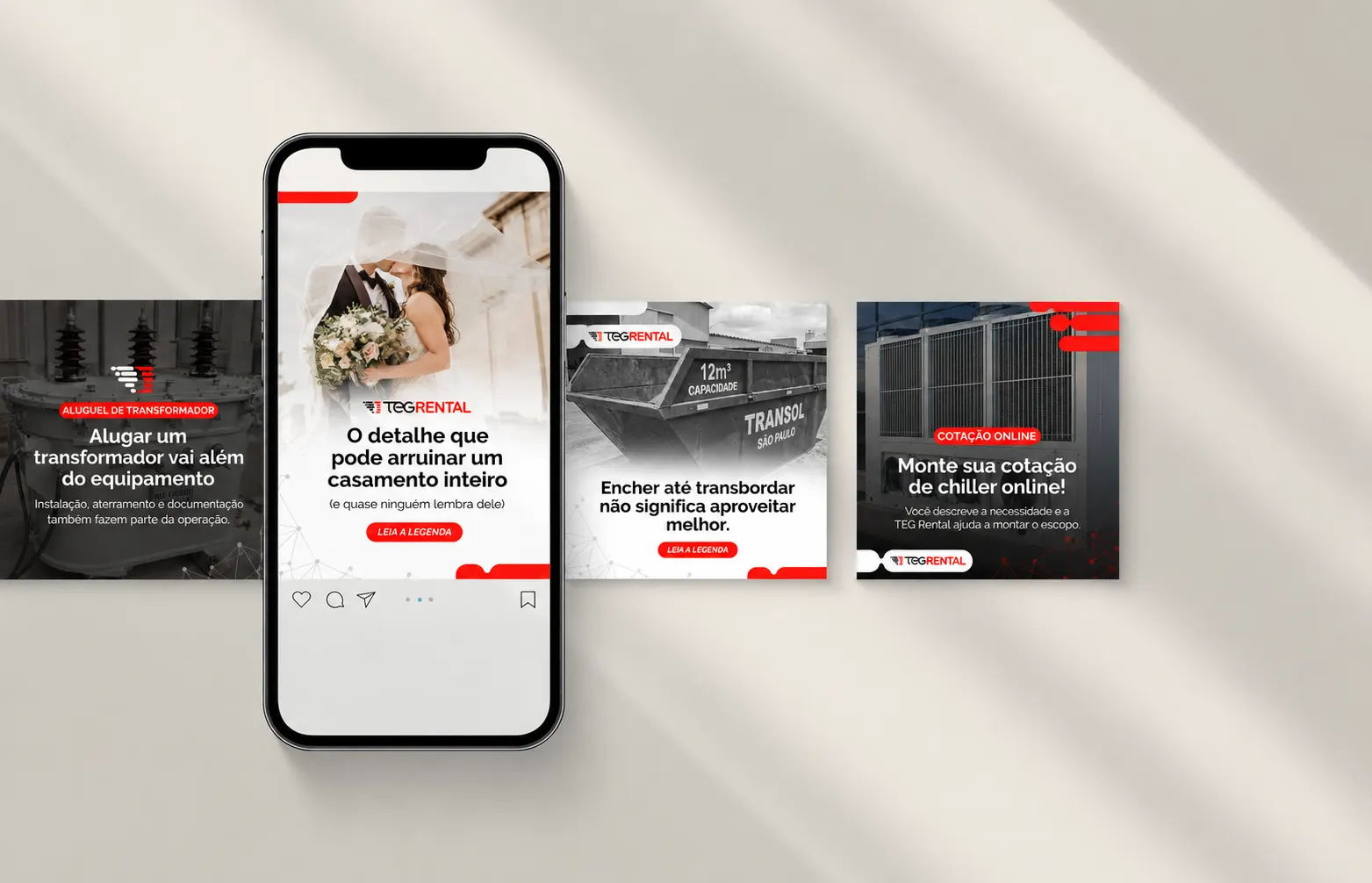
When the subject is paid traffic, the TEG Monitor and TEG Rental case tells the other side: there, paid traffic has its own funnel, taking people who are already searching for the service to the right contact, without relying on organic alone. The rule we take from it holds for any business: an ad needs a destination built for it. Sending the click to the home page of a general website is asking people to figure out for themselves what to do.
When to start with a landing page
- You are running a campaign with a start and an end date.
- The business sells one thing, or one specific offer.
- You want to test an idea before investing in a full website.
- You already have a website, but it was not built to receive ads.
When to start with a website
- Your customers usually search your name or your service on Google before getting in touch.
- You serve different audiences, with different questions.
- Some people need to check who you are before closing: referrals, contracts, partnerships.
- You want to be found without paying for every visit.
The most common mistake: one page for everything
It shows up in two ways. The first is the landing page that tries to be a website: a menu with seven items, three different buttons, and the person gets lost before acting. The second is the website doing the job of a landing page: the home page receives the ad and drops the person onto a screen with everything at once.
Fixing it does not mean starting over. Usually it is enough to separate what each page has to do and leave a single clear action on each one.
How to decide in five minutes
Write one line: “who will open this page, coming from where, and what do I want them to do?” If the answer fits on one line, start with the landing page. If it takes a paragraph, it is a website.
If you want help deciding, see our web design service, read the TEG Monitor and TEG Rental case to see how we think about people arriving from paid traffic, or ask for a quote telling us what you need. We will tell you plainly which of the two formats makes sense for your case.