Branding
When to Rebrand: Signs It Is Time for a New Brand
6 min read

Someone asks for your business card. You do have one, but you say “follow me on Instagram” and leave the box closed in the drawer. When you send a proposal, you delete the logo from the header, or shrink it so nobody notices.
People who search for when to rebrand are rarely just curious. Usually something is already bothering them, and the question is whether it justifies changing a brand that has been out there for a while.
Short answer: it is time to rebrand when the brand has stopped telling the truth about the business. That happens when you change audience, raise your prices, widen what you sell, merge companies, are not taken seriously by the client you want to serve, or avoid showing your own brand. If the only problem is that every piece comes out differently, a smaller fix may be enough.
What is a rebrand?
A rebrand remakes the way a brand presents itself, starting from what it already has. It can include the logo, colors, typography, graphic elements, tone of voice and, in some cases, the name. Changing only the logo drawing is usually not enough, because a brand is the whole system. If that difference is still unclear, read about logo, logotype and visual identity.
Rebranding is not erasing the past either. Whatever your clients already recognize has value and should be assessed before anything changes.
What are the signs your brand has fallen behind?
These are the ones that deserve the most attention:
- You do not feel like showing your brand. You hide the card, leave the logo off the proposal or apologize for the material before handing it over.
- Your audience changed. The people who buy today, or the people you want to buy, are not the ones the brand was designed for.
- Your prices went up, but your image did not. The service matured and the look still says you are just starting out.
- The business grew sideways. You now sell things the name, symbol or tagline do not explain.
- There was a partnership, a merger or a split. The company is different, and the brand still talks about the old one.
- The client you want does not take you seriously. The conversation starts with doubt, before they know your work.
One sign alone is not a verdict. But if you recognized two or three, it is worth taking a calm look at your brand.
From tucked away to proudly shown: Dr. Paulo Silva
Dr. Paulo Silva already had a brand, just not the kind you are eager to put on the table. We redid it.
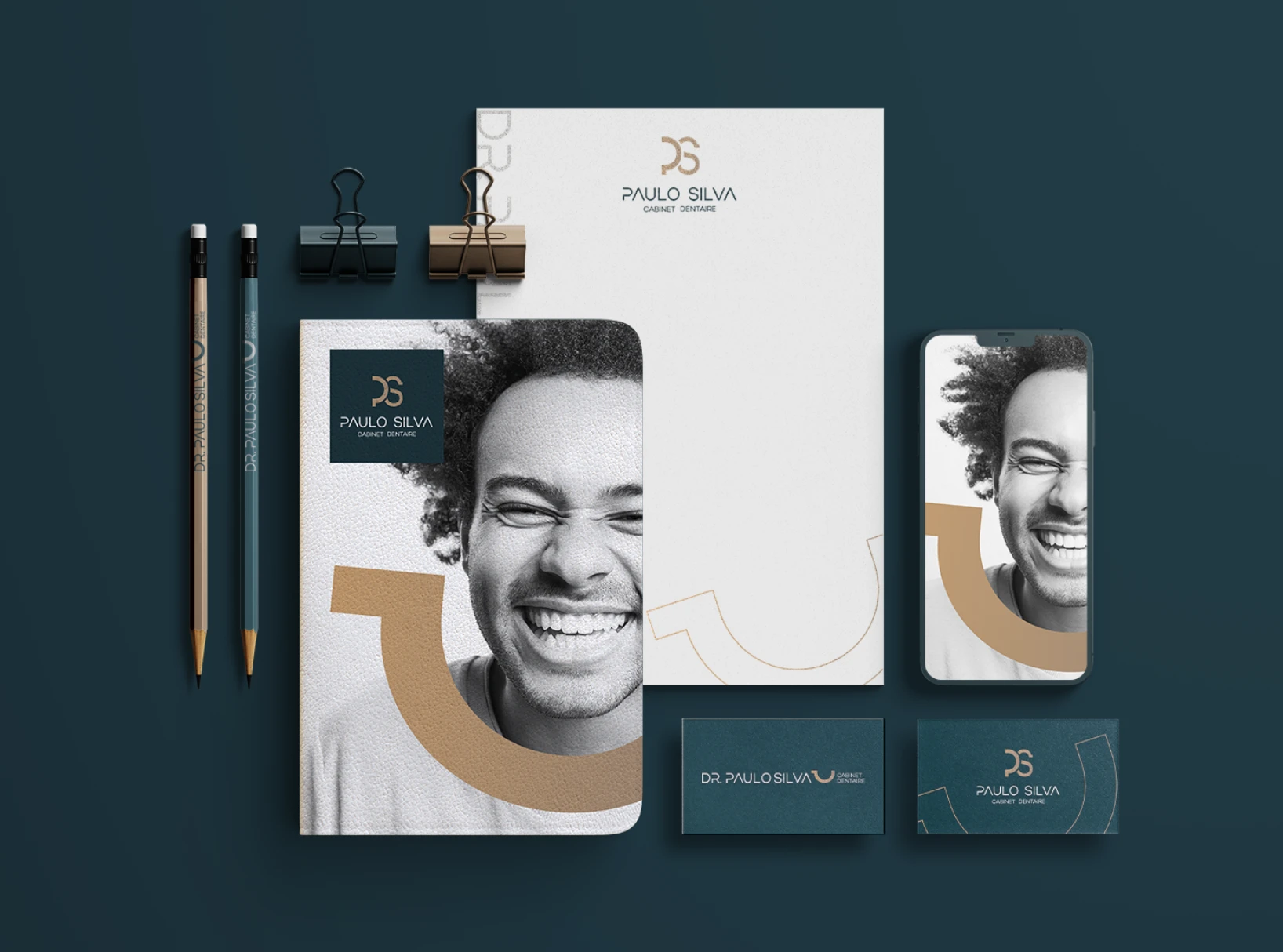
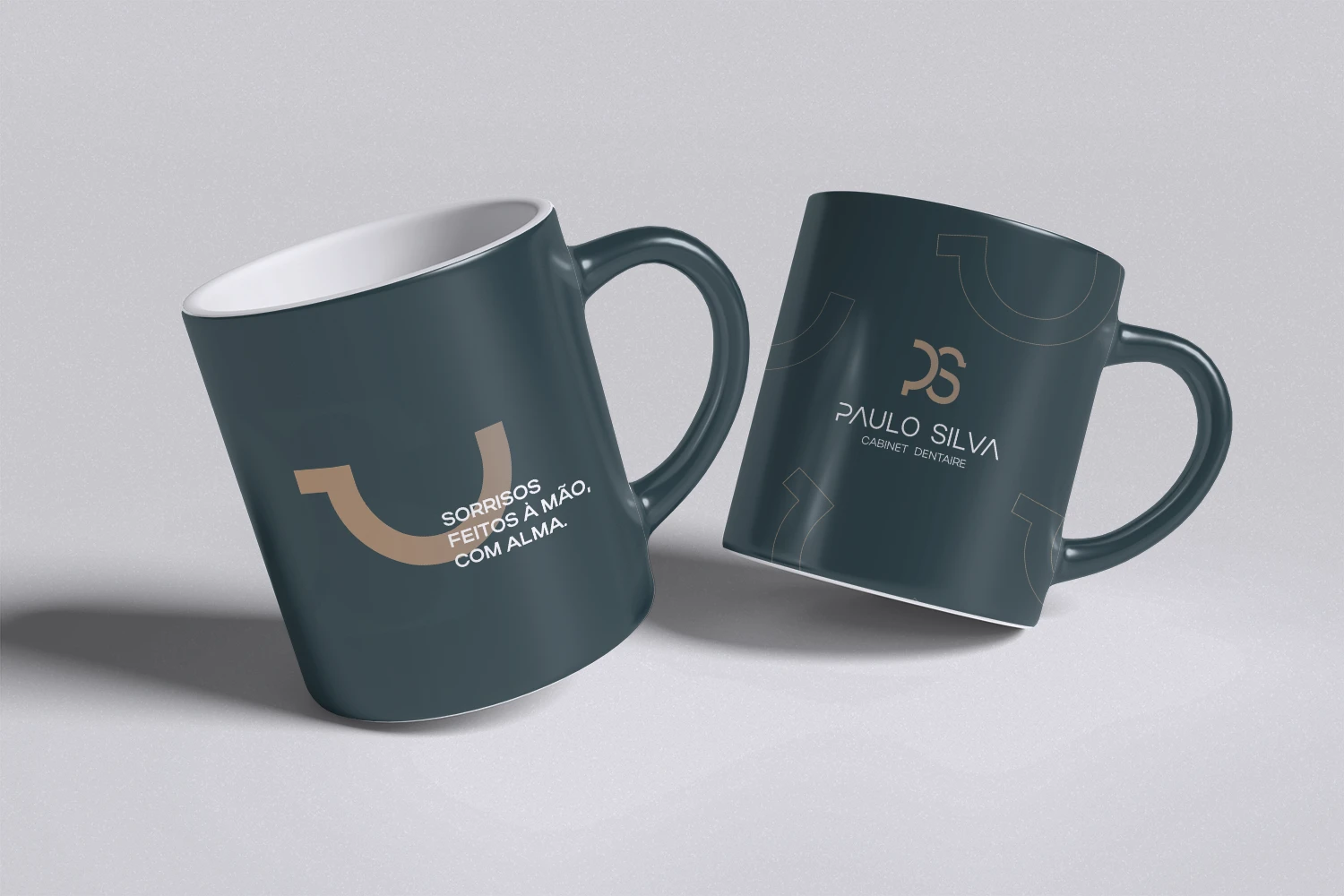
In the identity above, the monogram with the initials P and S comes in gold. Petrol blue sets the background, the name travels with the line Cabinet Dentaire, which says what he does, and a gold curve shaped like a smile shows up on the notebook, the letterhead, the phone and the card. On the mugs on the cover of this post, it comes with the line Sorrisos feitos à mão, com alma (smiles made by hand, with soul).
Notice that the change does not stop at one piece. The same system runs through paper, giveaways and the screen. That is what separates a rebrand from a logo swap: afterwards, everything a person hands over looks like it comes from the same place.
And the sign that started this story is one of the easiest to ignore, because it does not show up in any report. Only the owner of a brand knows when they are avoiding showing it.
Rebrand or just a refresh?
Not every discomfort calls for a new brand. This table helps tell them apart:
| What is happening | What usually solves it |
|---|---|
| The brand represents the business well, but every piece comes out differently | Organizing the usage rules into brand guidelines |
| The logo works, but versions for avatar, embroidery or dark backgrounds are missing | Completing the system with the missing variations |
| The look has aged, but audience and offer are the same | Updating the design while keeping what people recognize |
| Your audience, price or offer changed | A rebrand, with repositioning |
| You avoid showing your brand | A full diagnosis, to understand what no longer represents you |
| The name no longer fits what the company does | A rebrand with naming |
If the last one is your case, start with how to choose a business name, with the tests worth running before you decide.
How do you rebrand without losing the people who know you?
The most common fear is that old clients will not recognize the company. At L’Atelier, this is the path:
- Look at what already exists. Before designing, we analyze what carries recognized value: a color, a symbol, a way of speaking, the name itself.
- Keep that equity. What helps clients recognize the brand stays, even if it gets a better drawing.
- Rebuild the rest. Logo, palette, typography, graphic elements and tone of voice start working together.
- Plan the transition. We define how the change reaches each piece and the people who already follow the brand, so nobody thinks it is another company.
Before switching, list every place where the old brand appears: website, Instagram profile, Google Business Profile, email signature, business card, storefront, uniforms, packaging, proposal and contract templates. This list keeps the new brand from living too long next to leftovers of the old one.
As a time reference, an identity project at L’Atelier takes 6 weeks on average, from immersion to finished guidelines. With naming or packaging, it can reach 8 or 10. On the investment side, we explain how much a brand identity costs and what changes the price.
When should you not rebrand?
It is worth waiting when:
- the urge to change comes only from you being tired of the brand;
- the company does not yet know who it wants to serve from now on;
- the problem is in service, product or pricing, and a new brand will not fix it;
- there is no way to apply the new brand at least to the main touchpoints.
A new brand on top of an old doubt tends to call for another change soon after. The business decision comes first, the design comes next.
Starting next year with a new face?
The end of the year is a good time to ask: is the brand you have today the one you want to take into next year? If the answer got stuck, see how we approach rebranding and visual identity and tell us what is bothering you in a rebranding quote request.